Yards Cleared Down to Bare Ground
Tree debris removal in Elberfeld for properties left with scattered limbs, wood piles, and chipped material after cutting work
LATHAM'S TREE SERVICE LLC handles tree debris removal in Elberfeld, clearing what gets left behind after limbs come down, storms drop material, or cutting work finishes. Branches, bark, split wood, and scattered chips pile up fast, and the condition of a yard after cutting work is often worse than before if cleanup isn't planned from the start. The crew chips branches and smaller wood on-site where space allows, or loads everything into trucks for complete off-site disposal—whichever approach fits the property.
Larger logs are sectioned and can be set aside for firewood or staged for disposal based on what you need. On-site chipping works well when a property has open area and the chip volume can be spread or absorbed; truck removal makes more sense for tight lots, landscaped areas where bulk material would smother plantings, or jobs where the volume simply exceeds what the site can take. That decision gets made on arrival based on actual conditions rather than a blanket approach applied to every job.
Arrange a site visit to review what material is present and confirm the right removal method for your property.
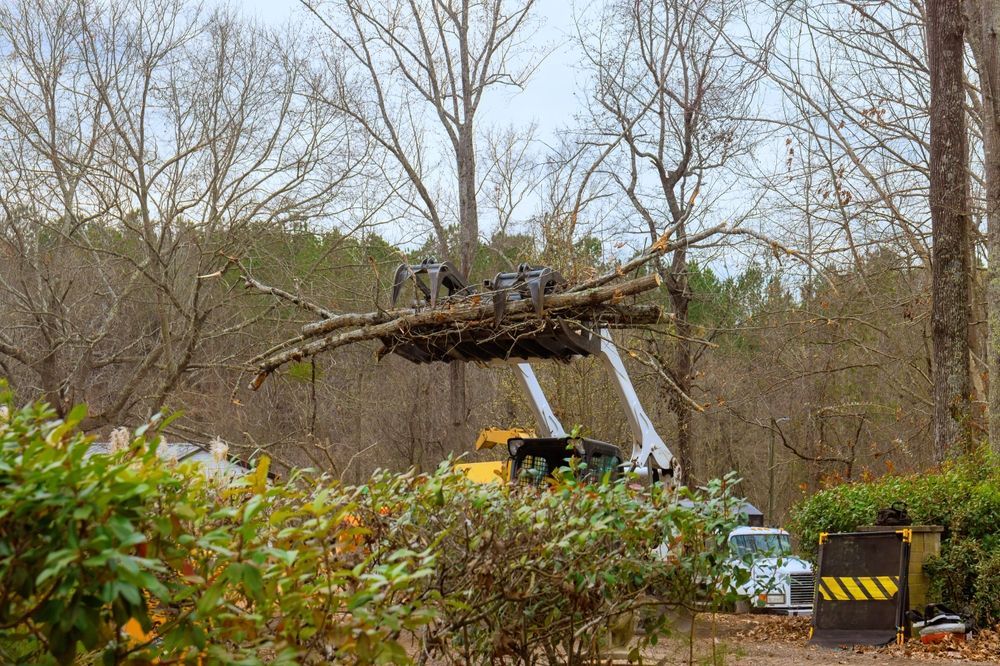
What a Finished Debris Removal Job Actually Looks Like
The goal of every cleanup is a site left clean and cleared—not material raked to the property edge or piled in a corner for you to deal with later. Once the crew finishes, branches are chipped or loaded, log sections are staged or removed per your instructions, and the ground is free of the scattered debris that makes a yard unusable after cutting work. LATHAM'S TREE SERVICE LLC does not treat debris removal as secondary to the cutting itself; it is the last visible measure of whether the job was finished correctly.
After the crew leaves, you should be able to walk the area, mow it, or begin any follow-on work without first moving material. That distinction matters when debris removal is attached to a larger job—if chips are left across a planting bed or log sections are dropped across a driveway, the cleanup created a secondary problem. Sectioned larger logs that are set aside for firewood are stacked in a usable location rather than dropped at random.
How the debris removal is scoped depends on the job that preceded it. A single removal of a dead tree produces a predictable debris volume. Lot clearing or storm damage across a larger area may involve multiple truck loads, multiple passes with the chipper, and log sections in varying sizes that each need a separate decision about destination. Both scenarios get handled, but the approach and sequence differ significantly between them.
Common Questions About Tree Debris Removal
Debris removal often raises practical questions about what happens to the material and how the site is left afterward. The answers below cover what actually happens during the work.
What is the difference between on-site chipping and hauling debris away?
On-site chipping reduces branch and limb material to chips immediately, which can be spread across the property or left in a pile; hauling removes all material by truck so nothing remains on site. The crew determines which method fits based on the available space and your preferences.
How are large logs handled during a debris removal job?
Logs too thick for the chipper are sectioned with a saw and either staged for firewood or loaded for off-site disposal based on your instructions at the time of the job.
What does the site look like when debris removal is finished?
The area is cleared of scattered limbs, chips, bark, and wood sections—you should be able to use the space immediately without moving remaining material yourself.
How does property type affect how debris removal is done?
Tight residential lots or landscaped yards often require truck removal to avoid burying plantings under chip volume, while open rural properties can typically absorb on-site chipping without issue.
Why does debris removal need to be planned before cutting starts rather than after?
Planning the removal method before cutting determines where material falls, how it is staged, and whether the chipper can access the site—decisions made after cutting often limit the options available for cleanup.
LATHAM'S TREE SERVICE LLC also performs debris removal in Evansville, Newburgh, Haubstadt, Boonville, and Darmstadt. If scattered wood, limbs, or chip piles are making your property unusable, contact LATHAM'S TREE SERVICE LLC at (812) 306-9696 to describe what material is present and set up a cleanup visit.